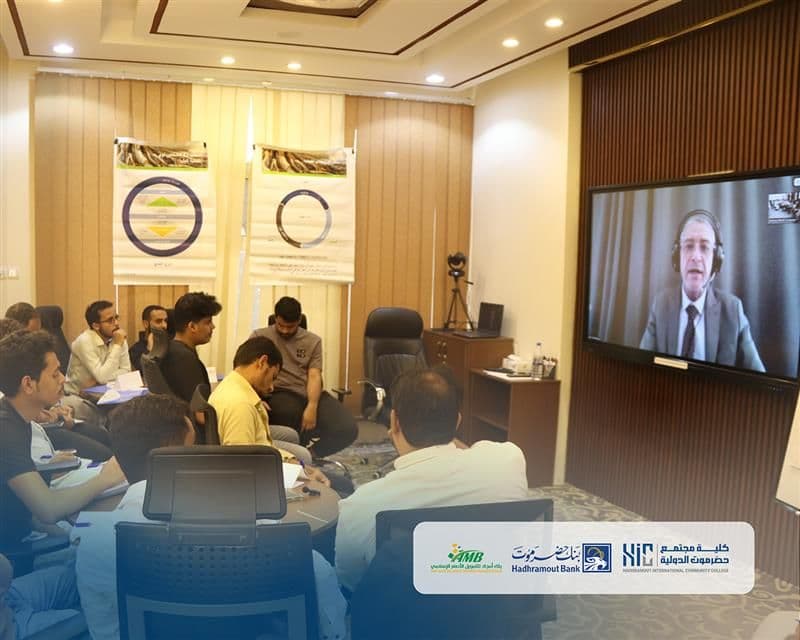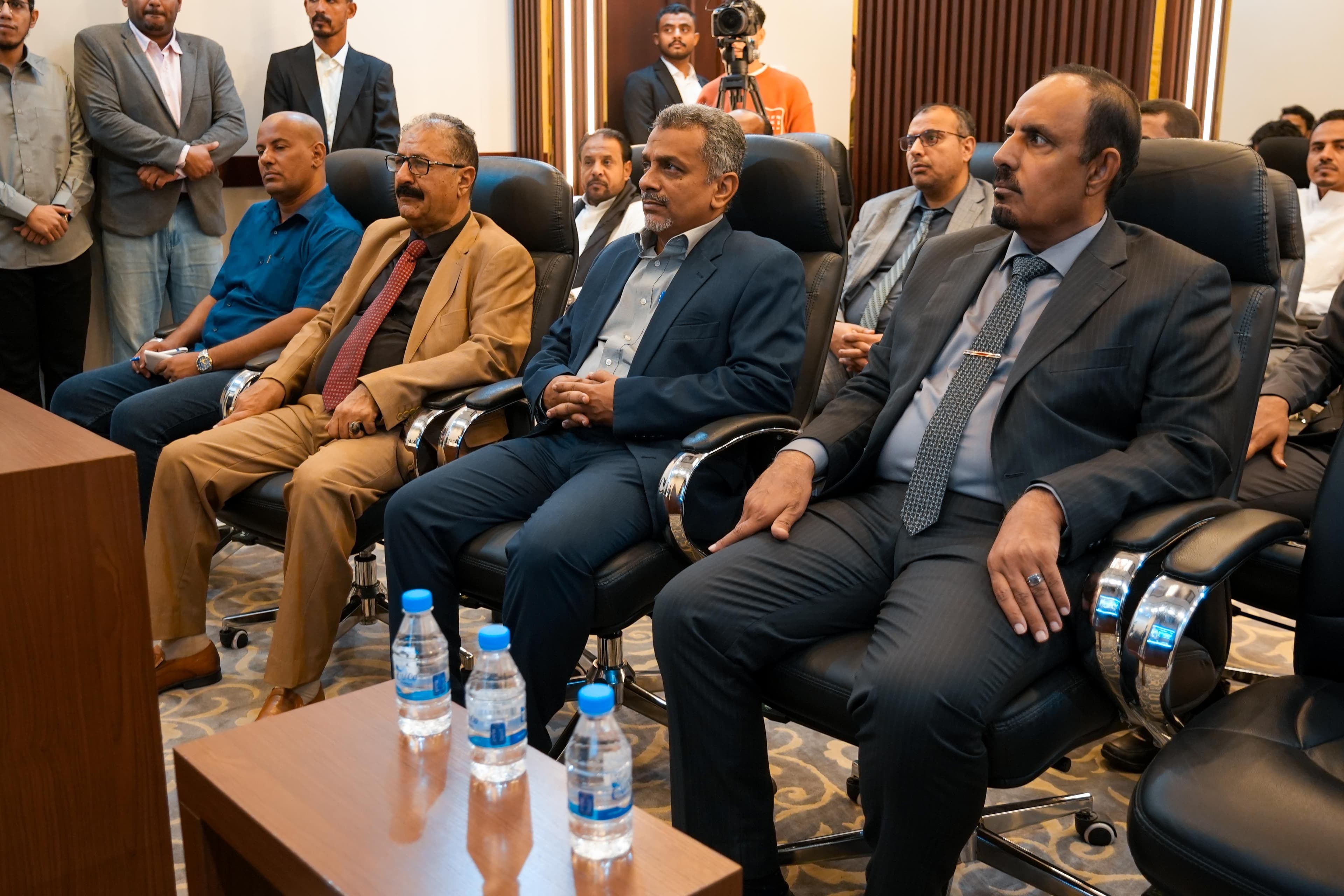


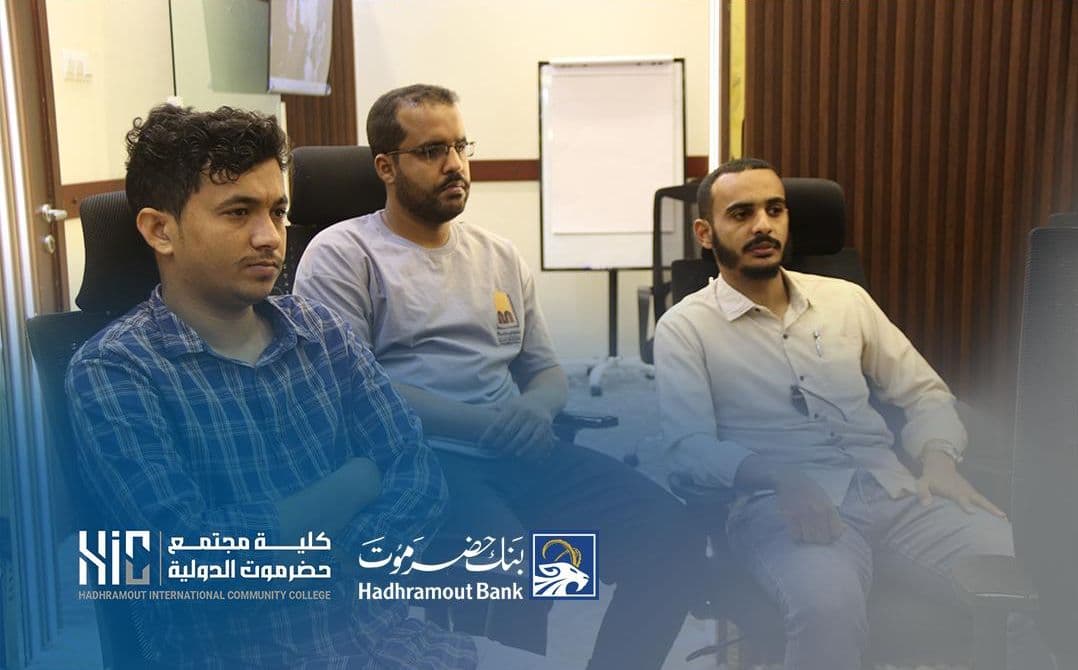
In a significant step, the Hadhramout International Community College launched the first introductory session of the Qualification Program targeting a number of Hadhramout University students. The program is supported by Hadhramout Bank and Amjad Bank and implemented by the Hadhramout International Community College. The program aims to prepare qualified cadres and competencies that meet the requirements of the labor market. The session was attended by Dr. Rabee bin Ali Al-Awbathani, Board Member of Hadhramout Bank and Dean of Hadhramout International Community College; Prof. Dr. Salem bin Salman, Assistant Vice President of Hadhramout University for Student Affairs; and Dr. Mohammed Bamataraf, Senior Consultant at Aalam Al‑Aamal for Investment and Studies. This program comes as an extension of joint understandings and coordination among the concerned entities and targets students from several vital disciplines, most notably: Information Technology, Computer Science, Accounting, Finance and Banking, Law, and Electronic and Communication Engineering, enhancing the alignment of educational outcomes with the needs of the banking and investment sectors. A total of 34 male and female students have been nominated to join the program. They will undergo a competitive screening and evaluation process based on precise criteria focusing on competence, seriousness, and commitment, to select 25 of the most qualified and ready candidates. Accepted participants will engage in a practical program focused on developing skills and enhancing capabilities, away from traditional rote-learning methods, contributing to the preparation of professional cadres capable of competing in local and regional labor markets. Outstanding participants who successfully complete the program requirements will be offered employment opportunities at Hadhramout Bank, Amjad Bank, Aalam Al-Aamal for Investment and Studies, and Hadhramout International Community College. The banks’ support for this initiative reflects a firm belief in the importance of investing in human capital and strengthening partnerships with educational institutions as a fundamental pillar for building a sustainable development model that empowers youth and supports the development process.